You brought your child in because you wanted to understand more about their health and development.
Maybe you’ve been navigating meltdowns. Bedtime battles. Sensory overload. The everyday challenges that can turn an ordinary Tuesday into a very long day.
You’ve spent months, perhaps years, researching, advocating, driving to appointments, managing routines and trying to find answers.
And somewhere along the way, your own wellbeing has slipped further and further down the list.
Then, during a conversation about your child’s health, your chiropractor asks a question you might not have expected:
“And how are you doing?”
Not as an afterthought. Not because your child’s health is somehow your responsibility to fix.
But because your health matters too.
And there’s an important relationship between the way parents and children respond to stress, connect with one another and navigate the demands of everyday family life.
Your child’s nervous system is developing within a world of relationships, experiences and interactions. And yours is part of that world.
If you’ve spent years putting yourself last and promising you’ll deal with your own health “when things settle down”, this one’s for you.
When Everyone Else Comes First and Mum Is Running on Empty
Here’s something we hear from parents regularly.
They’re managing the school mornings, the appointments, the meals, the emotional ups and downs, and the endless mental load of keeping family life moving.
They’re doing everything they can for their children.
But when we ask about their own health, the answer is often something along the lines of:
“Oh, I’m fine. Just tired.”
Except sometimes “just tired” means waking up exhausted, carrying tension through your shoulders, feeling stiff after a long day or struggling to find time for yourself.
And when those physical demands continue for months or years, it’s easy to start accepting them as normal.
The body responds to physical and emotional stress in many ways.
Heart rate may increase. Breathing patterns can change. Muscles may become tense. Sleep and recovery can be affected.
These responses involve the nervous system, which continuously coordinates how the body responds to changing demands.
And while parenting can be enormously rewarding, it can also place considerable demands on your physical and emotional resources.
Looking after your own health isn’t taking something away from your family. It’s recognising that you matter within it.
Co-Regulation Is Physiology, Not Just a Parenting Technique
One of the most fascinating aspects of early childhood development is something called co-regulation.
Co-regulation describes the way children develop emotional and behavioural regulation through supportive interactions with the people around them.
For babies and young children, this is particularly important because their ability to manage strong emotions is still developing.
Think about a baby who becomes unsettled and gradually calms while being held, rocked or spoken to gently.
Or a toddler who’s overwhelmed by frustration and finds reassurance in a familiar voice and comforting presence.
These everyday interactions involve a complex combination of emotional connection, sensory experiences, communication and physiological responses.
Research has also explored how parents and children can show patterns of physiological synchrony, including changes in heart rate and other measures of autonomic activity during interactions.
But that doesn’t mean their nervous systems are always operating in perfect synchronisation.
Nor does it mean that a stressed parent automatically causes a stressed child.
Co-regulation is a developing relationship, not a test of how calm or capable you are as a parent.
And it isn’t something you have to perform perfectly.
Children learn through repeated experiences of connection, reassurance and interaction over time.
Understanding co-regulation can help explain why your own wellbeing deserves attention alongside the enormous effort you put into caring for your children.
Your Gas Pedal, Your Brake Pedal and the Vagus Nerve
Your Autonomic Nervous System helps regulate many of the functions your body carries out automatically.
It includes two important branches:
- The sympathetic nervous system is the gas pedal. It helps prepare your body for action, increasing alertness and supporting responses to physical or emotional demands.
- The parasympathetic nervous system is the brake pedal. It contributes to functions associated with rest, digestion and recovery.
These branches don’t simply switch on and off.
They work together continuously, helping your body respond to what is happening around you.
An important part of the parasympathetic system is the vagus nerve.
The vagus nerve extends from the brainstem through the neck and into the chest and abdomen, contributing to the regulation of heart rate, digestion and other automatic bodily functions.
When you experience a stressful situation, your body may respond with a faster heartbeat, changes in breathing and increased muscular tension.
As the situation passes, your body’s physiological responses can gradually change again.
This ability to respond and adapt is an important part of normal nervous system function.
Where does chiropractic fit in?
The nervous system also receives continuous sensory information from the muscles, joints and tissues throughout your body.
This information helps coordinate movement, posture, balance and body awareness.
Your spine plays an important role in this process because its joints, muscles and surrounding structures contribute to movement and sensory feedback.
From a chiropractic perspective, understanding spinal movement, joint restrictions and muscular activity is central to assessing musculoskeletal health.
Chiropractors may use the term vertebral subluxation to describe certain patterns of altered spinal joint function, although the term has different definitions within the profession.
It’s important not to confuse these findings with a diagnosed autonomic nervous system disorder.
Spinal restrictions haven’t been established as a cause of vagus nerve dysfunction or an inability to regulate emotions.
But spinal movement and muscular function are still important aspects of physical health that deserve appropriate assessment.
And when you’re spending your days lifting children, carrying bags, sitting at desks and managing the physical demands of family life, your spine and muscles are doing plenty of work.
Why So Many Mums Feel Like They’re Running on Empty
Think about everything your body may have experienced over the past few years.
Pregnancy. Birth. Feeding. Carrying babies and toddlers. Broken sleep. Long days. Physical work. Emotional demands.
And then there’s the mental load.
Remembering appointments. Planning meals. Managing school commitments. Organising the household. Keeping track of everyone else’s needs.
Sometimes, it feels as though your body never gets a chance to switch off.
Stress isn’t simply something that happens in your thoughts.
It can also influence physical experiences, including muscle tension, breathing patterns, sleep and pain perception.
The nervous system and endocrine system communicate through pathways such as the hypothalamic-pituitary-adrenal (HPA) axis, which contributes to the body’s hormonal stress response.
The hypothalamic-pituitary-gonadal (HPG) axis plays a role in reproductive hormone regulation.
These systems interact in complex ways, although experiencing stress doesn’t automatically mean you have a hormonal imbalance or nervous system disorder.
And while stress isn’t literally stored in the spine as subluxation, ongoing physical and emotional demands can influence how your muscles feel, how you move and how you experience discomfort.
That familiar feeling of being “wired but tired”?
It may reflect a combination of stress, disrupted sleep, physical demands and other factors.
It’s not a weakness or a character flaw. It’s a reminder that your own health deserves attention too.
What Can Change When Mum Starts Looking After Herself?
When you’re responsible for so much, it’s easy to overlook your own physical needs.
But there are good reasons to pay attention to how your body is functioning.
Physical comfort
Carrying children, bending, lifting and spending long periods in one position can place demands on your spine and surrounding muscles.
A chiropractic assessment can help identify relevant joint restrictions, movement limitations and musculoskeletal concerns.
Where appropriate, chiropractic care may help with certain spinal or musculoskeletal symptoms.
Movement and mobility
Your spine works together with your muscles and joints to support everyday movement.
Whether you’re lifting a toddler, reaching into the back seat of the car or getting down on the floor to play, comfortable movement matters.
Understanding your spinal function can help you make informed decisions about your physical health.
Posture and muscular activity
Long periods of sitting, feeding, carrying and repetitive movement can contribute to muscular discomfort.
Chiropractors assess posture, joint movement and muscular function as part of a broader musculoskeletal examination.
Pregnancy and postnatal physical changes
Pregnancy and the postnatal period involve significant physical adaptations.
Changes in posture, weight distribution, abdominal muscle function and everyday movement can influence the way the spine and pelvis are loaded.
For some women, these changes are accompanied by back pain or other musculoskeletal discomfort.
Chiropractic assessment may be relevant when considering these physical concerns, with care adapted to the individual’s circumstances.
Making your health a priority
Perhaps one of the most important changes is simply deciding that your own physical health deserves time and attention.
Not because looking after yourself guarantees calmer children or an easier household.
But because you deserve to feel comfortable, move well and make informed decisions about your own health.
The Whole-Family Connection
At Coast Family Chiropractic, we love caring for families.
Not because every family member has the same needs.
Quite the opposite.
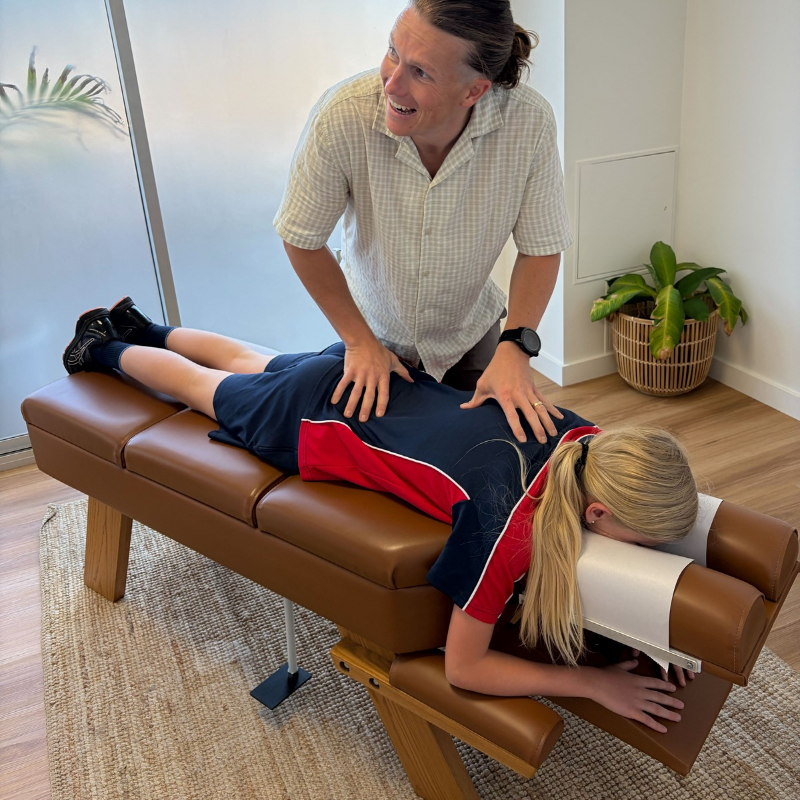
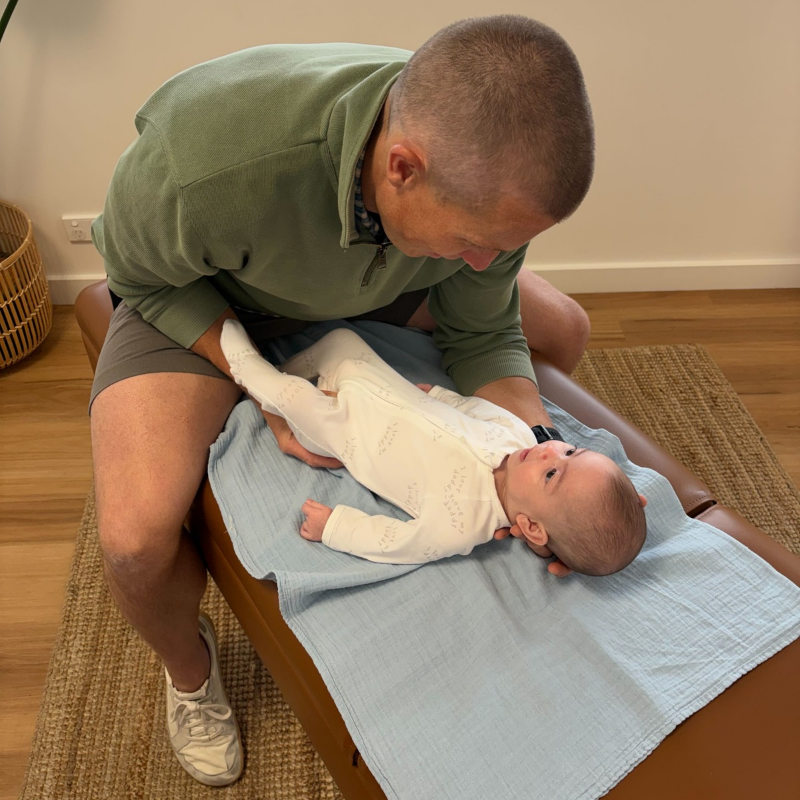
A newborn, a school-aged child, a pregnant mum and a busy dad all have very different bodies, developmental stages and physical demands.
And that’s exactly why individualised assessment matters.
For a baby, we may be considering age-appropriate movement, posture and musculoskeletal findings.
For a growing child, we may be looking at spinal movement, physical activity and the demands of everyday development.
For a parent, the focus might be spinal stiffness, muscular discomfort or the physical demands of work and family life.
And for grandparents, it may be maintaining comfortable movement and managing musculoskeletal concerns as they age.
Different stages of life. Different physical needs. The same commitment to understanding each person as an individual.
There’s also something valuable about families taking an interest in their health together.
Children grow up observing the habits, routines and attitudes of the people around them.
When looking after physical health becomes a normal part of family life, it creates opportunities to talk about movement, activity and wellbeing in a positive way.
That doesn’t mean chiropractic care for one family member will improve another person’s nervous system function or emotional regulation.
It means everyone in the family deserves the opportunity to have their own physical concerns understood.
And that’s something we’re proud to support.
Getting Scanned Is Simpler Than You Think
You’ve spent so much time thinking about your child’s health.
When was the last time you stopped to think about your own?
At Coast Family Chiropractic, our assessment process begins with understanding your health history, current physical concerns and how your body is moving and functioning.
Where appropriate, we may also use INSiGHT scanning technologies to collect additional physiological and muscular measurements.
These include:
- neuroTHERMAL scanning: measures patterns of skin temperature along the spine.
- neuroCORE surface electromyography (sEMG): measures electrical activity in muscles along the spine, providing information about muscular activity during testing.
- Heart Rate Variability (HRV): measures variations in the time between heartbeats, providing information associated with autonomic nervous system activity.
These measurements can contribute information to our assessment, although they must be interpreted alongside your clinical history and examination findings.
The scans don’t diagnose medical conditions, establish the cause of fatigue or emotional stress, or independently identify nervous system dysfunction.
They also cannot determine whether chiropractic adjustments will improve sleep, hormonal balance or emotional regulation.
Our goal is to understand your spinal and musculoskeletal function and determine whether chiropractic care is appropriate for your individual needs.
Because looking after yourself deserves the same thoughtful approach you want for the people you love.
Taking Care of You Matters Too
You spend so much of your time making sure everyone else is okay.
The children are fed. The bags are packed. The appointments are organised. The routines are running.
And somehow, your own health keeps getting pushed to tomorrow.
But you matter in this family too.
Your physical comfort matters. Your ability to move comfortably matters. Your health and wellbeing deserve attention.
And you don’t have to wait until everyone else’s needs have been met before considering your own.
Looking after yourself isn’t a luxury. It’s part of recognising that your health is important, too.
At Coast Family Chiropractic, we’re proud to care for individuals and families through different stages of life, with chiropractic assessments and care tailored to their physical needs.
If you’ve been putting your own spinal health on the back burner, we’d love to help you take a closer look.
Get in touch with Coast Family Chiropractic today to arrange a consultation and find out whether chiropractic care is right for you.
Because the whole family includes you.