Your child reaches for their drink without even looking at their hand.
They climb the playground equipment, knowing instinctively where to place their feet. They run across the grass, jump over a puddle, and somehow manage to catch themselves when they stumble.
And they do all of this without stopping to think about every single movement.
Pretty amazing when you think about it.
But here’s something even more fascinating.
Your child’s brain isn’t doing all the talking. Their body is constantly talking back.
Every movement, every stretch, every change in position sends information through the nervous system.
Their muscles, joints and sensory receptors are continuously providing updates about what’s happening throughout their body.
And their brain uses that information to help coordinate movement, maintain balance and understand where their body is in space.
It’s an extraordinary conversation happening every second of every day.
Yet most of us never give it a second thought.
At Coast Family Chiropractic, this relationship between the brain, body and nervous system is something we find endlessly fascinating.
Because understanding how the body communicates with the brain gives us a whole new appreciation for the importance of movement, sensory feedback and spinal function.
Your Nervous System Is a Two-Way Street
Most of us grow up thinking about the nervous system in one direction.
The brain sends a message.
The muscles respond.
The body moves.
And while that’s certainly part of the picture, it’s only half the conversation.
The nervous system is constantly communicating in both directions.
Signals travelling from the brain towards the body help coordinate movement and other functions. These are often called efferent signals.
Meanwhile, signals travelling from the body towards the central nervous system provide information about sensation, movement and position. These are called afferent signals.
Think of it like a conversation between two people.
If only one person talks, there’s no real exchange of information.
But when both people are communicating, listening and responding, the conversation becomes much more useful.
Your child’s nervous system works through a continuous exchange of information.
When they reach for a toy, their brain helps organise the movement.
At the same time, sensory receptors in their muscles and joints provide feedback about how their arm is moving and where their hand is positioned.
That information helps the nervous system monitor and refine the movement as it happens.
The brain doesn’t simply tell the body what to do. It also relies on information coming back from the body.
And that brings us to one of the nervous system’s most remarkable abilities.
Meet Proprioception: Your Child’s Hidden Sense
We all know about the five senses.
Sight. Hearing. Smell. Taste. Touch.
But there’s another important sense that often gets overlooked.
It’s called proprioception.
Proprioception is your body’s ability to sense its own position and movement without needing to look.
Close your eyes for a moment.
Now touch your nose with your index finger.
How did you know where your hand was?
You couldn’t see it.
You didn’t need someone to guide it.
Your nervous system was using sensory information from your muscles, tendons and joints to help coordinate the movement.
That’s proprioception at work.
And your child relies on it constantly.
When they climb onto the couch, step over a toy, hold a pencil or walk across an uneven surface, proprioceptive information helps their nervous system understand what their body is doing.
It also contributes to the coordination of muscle activity and the control of movement.
Specialised sensory receptors detect changes in muscle length, muscle tension and joint position.
These signals travel through sensory pathways towards the spinal cord and brain, where they contribute to the nervous system’s ongoing understanding of the body.
And here’s the remarkable part.
Most of this happens without your child consciously thinking about it.
They don’t have to calculate the position of every joint before taking a step.
Their nervous system is continuously gathering and processing the information needed to move.
Your Child’s Brain Is Constantly Updating Its Body Map
Imagine trying to navigate a city using a map that never updated.
Roads change. New buildings appear. Routes become blocked.
Without fresh information, getting around would become much more difficult.
Your child’s nervous system also relies on constantly updated information.
The brain maintains internal representations of the body that contribute to the awareness and control of movement.
These representations are sometimes described as a body map.
But they’re not fixed diagrams stored somewhere in the brain.
They’re dynamic networks that integrate information from different sensory systems.
Proprioception is one important contributor.
Vision provides information about the surrounding environment.
The vestibular system, located within the inner ear, contributes information about head movement and balance.
Touch provides additional information about contact, pressure and sensation.
Together, these systems help your child understand their body in relation to the world around them.
Think about learning to ride a bike.
At first, your child might concentrate intensely on balancing, steering and keeping their feet moving.
Their movements may be wobbly and uncertain.
But with practice, the nervous system becomes more skilled at coordinating the information needed for the task.
Eventually, movements that once required enormous concentration become more automatic.
This is one example of how the nervous system adapts through experience and learning.
And it’s part of the reason movement and sensory experiences are so important throughout childhood.
So, Where Does the Spine Fit Into This Conversation?
Here’s where things get particularly interesting from a chiropractic perspective.
When most people think about the spine, they picture a stack of bones holding the body upright.
And yes, the spine provides structural support and protects the spinal cord.
But that’s not the whole story.
The spine is also part of a remarkably active sensory system.
The muscles, tendons and joints surrounding the spine contain receptors that respond to movement, stretch and changes in position.
These receptors provide sensory information to the nervous system.
For example, when your child turns their head to look over their shoulder, sensory receptors in the neck contribute information about the position and movement of the head.
When they bend, twist or reach, sensory feedback from the trunk contributes to their awareness and control of movement.
The nervous system combines this information with signals from other parts of the body.
And the neck is particularly interesting because information from its muscles and joints contributes to the coordination of head position and movement.
This sensory feedback works alongside information from the eyes and vestibular system.
It’s one of the many ways the body and brain work together.
From a neurologically-focused chiropractic perspective, this is why spinal movement and muscular function are worth understanding.
Not simply because the spine supports the body.
But because movement of the spine and its surrounding tissues contributes sensory information to the nervous system.
That doesn’t mean every neurological challenge originates in the spine, or that changing spinal movement will automatically change how the brain processes information.
It means the spine has an important sensory role as well as a structural one.
And that’s a fascinating part of human physiology.
What Happens When Sensory Information Changes?
Your child’s nervous system doesn’t receive exactly the same information every moment of the day.
Sensory input changes depending on what they’re doing.
When they’re running, their muscles and joints are providing different information than when they’re sitting quietly.
When they turn their head, the sensory signals from their neck change.
When they balance on one foot, the nervous system has to coordinate information from several sensory systems to help maintain stability.
And when movement is restricted by discomfort, injury or a musculoskeletal limitation, the sensory information associated with that movement may also change.
This is a normal feature of how the nervous system responds to the body.
It’s important, however, not to confuse changes in sensory feedback with a diagnosis of sensory processing dysfunction.
A child who dislikes loud noises, struggles with certain textures or finds busy environments overwhelming may have a range of contributing factors.
Those experiences cannot be explained simply by assuming there’s interference coming from the spine.
Similarly, a restriction in spinal movement doesn’t establish that the brain is receiving faulty messages or that the child’s nervous system is unable to regulate itself.
Sensory processing is complex, and different sensory experiences involve different neurological pathways.
What we can say is that the nervous system depends on a continuous flow of sensory information to help coordinate movement and physical function.
And the muscles and joints of the spine contribute to that process.
Why Movement Matters During Childhood
Think about how much a child learns through movement.
A baby begins by lifting their head.
Then comes reaching, rolling, sitting and crawling.
Eventually, they’re standing, walking, running, climbing and jumping.
As children grow, they explore increasingly complex movements.
They learn to balance on uneven surfaces.
They practise catching balls, riding bikes, dancing, swimming and navigating playgrounds.
Each new experience involves the coordination of sensory information and motor activity.
Movement also gives children opportunities to practise skills, adapt to changing environments and become more confident in what their bodies can do.
The nervous system is remarkably adaptable, particularly during childhood.
This capacity to change and learn through experience is often described as neuroplasticity.
Neuroplasticity is involved in learning, memory, skill development and many other aspects of nervous system function.
But it’s important to understand that neuroplasticity isn’t something that only happens when a particular treatment is provided.
It’s an ongoing feature of how the nervous system develops and responds to experience.
Everyday movement, play and practice all provide opportunities for learning.
And while children develop at different rates, the ability to move comfortably and participate in age-appropriate physical activities is an important part of their physical wellbeing.
What Does Neurologically-Focused Chiropractic Actually Look At?
At Coast Family Chiropractic, our interest in the nervous system shapes how we think about spinal and musculoskeletal function.
We don’t see the spine as simply a collection of bones.
We recognise that spinal muscles and joints are part of a broader sensory and motor system.
That’s why our assessment considers more than whether someone has a sore back or a stiff neck.
We take time to understand their physical history, movement patterns, spinal function and relevant musculoskeletal findings.
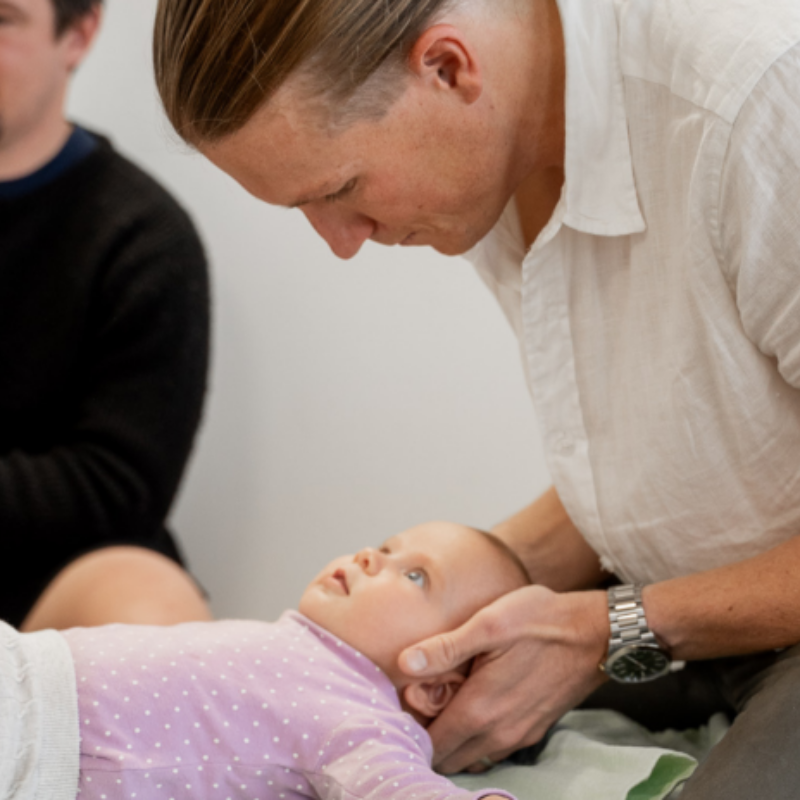
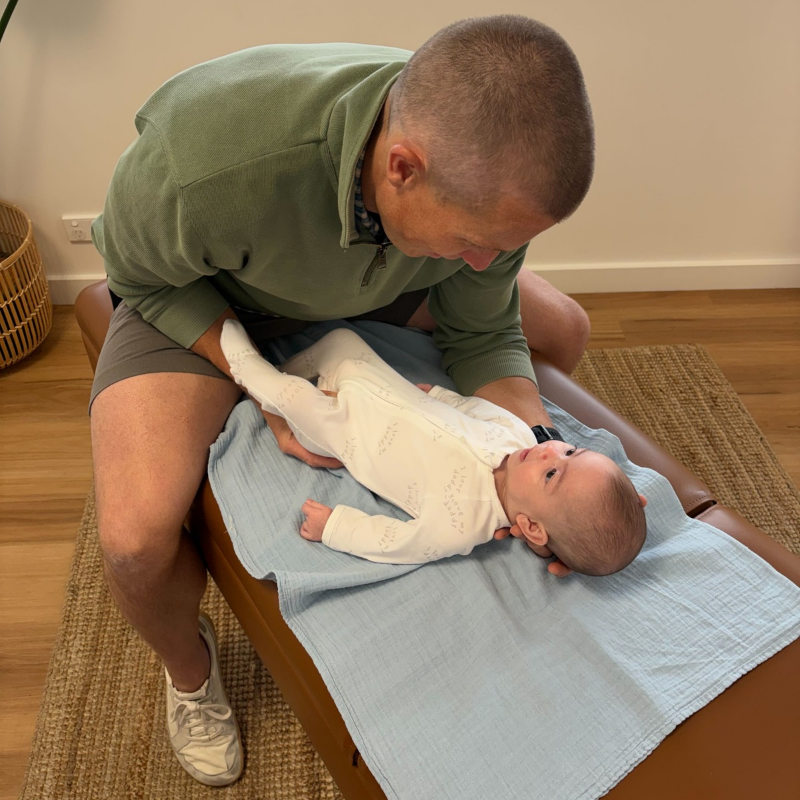
For children, that may include discussing their developmental history, physical activities and any concerns relating to movement or comfort.
We also consider how the muscles surrounding the spine are functioning.
The aim is to build an individual picture of their musculoskeletal health.
Being neurologically focused means recognising the relationship between movement, sensory feedback and the nervous system, while using appropriate clinical findings to guide chiropractic care.
It doesn’t mean assuming that every behaviour, symptom or developmental difference can be traced back to the spine.
And it doesn’t mean treating a scan result as a diagnosis of a neurological condition.
Our focus is on understanding the aspects of spinal and musculoskeletal function that fall within chiropractic assessment and care.
What Can INSiGHT Scans Tell Us?
One of the ways we gather information at Coast Family Chiropractic is through INSiGHT scanning technology.
These non-invasive technologies provide measurements relating to certain physiological and muscular functions.
Depending on the individual assessment, we may use:
neuroCORE Surface Electromyography (sEMG)
This measures electrical activity in muscles along the spine.
It provides information about muscular activity during the assessment.
neuroTHERMAL Scanning
This measures skin temperature patterns along the spine.
Skin temperature can be influenced by several factors, including physiological responses and environmental conditions.
Heart Rate Variability (HRV)
HRV measures variations in the time intervals between heartbeats.
It provides information associated with autonomic nervous system activity, although results can be affected by factors such as age, breathing, activity and measurement conditions.
These measurements can contribute additional information to an assessment when interpreted appropriately.
However, INSiGHT scans don’t directly measure proprioception, reveal the messages travelling from the spine to the brain or show how the brain is interpreting sensory information.
They also cannot diagnose sensory processing disorders, developmental conditions or neurological interference.
And a particular scan pattern cannot, on its own, establish that chiropractic care is needed or predict a treatment outcome.
The value of any assessment lies in understanding what a measurement actually tells us and interpreting it alongside the person’s clinical history and examination findings.
That’s an important part of taking an individualised approach.
Why We Look Beyond Pain
Here’s something worth considering.
We often pay attention to our bodies only when something hurts.
A sore back.
A stiff neck.
A muscle that feels tight after exercise.
But the nervous system is involved in movement and sensory feedback all the time, not only when pain is present.
That’s why understanding musculoskeletal function can involve looking at how the body moves, not simply asking whether something hurts.
For children, this might mean considering whether they have a persistent movement restriction, an unusual posture or difficulty with a particular physical activity.
These observations don’t automatically indicate a problem requiring treatment.
Children vary enormously in their movement abilities, physical development and coordination.
But where there is a genuine musculoskeletal concern, an appropriate assessment can help clarify what’s happening and whether care is indicated.
At Coast Family Chiropractic, we’re interested in understanding the individual rather than making assumptions based on symptoms alone.
Because physical function is about more than the presence or absence of pain.
Your Child’s Body and Brain Are Always in Conversation
Right now, your child’s nervous system is doing something extraordinary.
It’s receiving information from their muscles and joints.
It’s processing signals about movement and position.
It’s combining sensory information from different parts of the body.
And it’s helping coordinate the countless little movements that make everyday life possible.
When they reach for your hand, jump off a step, climb a tree or curl up beside you on the couch, their nervous system is continuously working.
Much of that communication happens without them ever being aware of it.
And perhaps that’s the most fascinating part.
The nervous system isn’t simply a control centre issuing instructions. It’s an active, responsive network that depends on information flowing in both directions.
The spine and its surrounding muscles and joints contribute to that ongoing conversation.
Understanding this relationship helps explain why spinal movement, sensory feedback and muscular function are such interesting areas of chiropractic assessment.
Not because every challenge begins in the spine.
But because the spine is part of a much bigger neurological picture.
Curious About Your Child’s Spinal and Nervous System Function?
At Coast Family Chiropractic, we take a neurologically-focused approach to understanding spinal movement and musculoskeletal health.
We consider the relationship between the spine, muscles, sensory feedback and nervous system function, using an individualised assessment process.
Where appropriate, our assessments may include INSiGHT scanning technologies to gather additional physiological and muscular measurements.
If you have questions about your child’s spinal movement, posture or musculoskeletal function, we’d love to help you understand what a chiropractic assessment involves and whether it’s appropriate for your child.
Get in touch with Coast Family Chiropractic to arrange a consultation.
Because understanding how the body moves is one part of appreciating the extraordinary relationship between the brain, body and nervous system.