You’ve watched your child go from calm to meltdown in what feels like seconds. You’ve tried the deep breaths, the calm-down corners, sticker charts, parenting strategies, and maybe even professional supports along the way.
And yet, for many families, the patterns still feel like they keep repeating.
If that sounds familiar, it doesn’t necessarily mean you’ve missed something. It may simply mean you’re looking at your child in isolation, rather than considering the broader environment their nervous system is responding to.
Children Don’t Develop in Isolation
One of the most important principles in neuroscience and child development is that children develop in relationship.
They are constantly learning from the environment around them—particularly the emotional tone, stress patterns, and regulation capacity of their primary caregivers.
This process is often referred to as co-regulation.
Co-regulation describes how a child’s nervous system uses the presence of a regulated adult as a reference point for safety, calm, and emotional organisation. It is not a parenting philosophy—it is a well-described aspect of early neurodevelopment.
In practical terms, children often respond not just to what we say, but to how regulated we are when we say it.
When Parents Are Running in Survival Mode
Many parents today are managing chronic stress loads—poor sleep, emotional overload, constant mental load, and very little recovery time.
Over time, this can influence how the nervous system functions day to day, including how quickly the body shifts between stress and rest states.
When a parent is under sustained stress, it can become harder to consistently access calm, even when they are actively trying to.
This is not a failure. It is a physiological response to load.
And children are highly attuned to these patterns. Not in a conscious way, but through subtle cues such as tone of voice, facial expression, breathing patterns, and overall emotional availability.
Co-Regulation in Action
Research in developmental neuroscience suggests that children rely heavily on external regulation from caregivers, particularly in the early years.
This includes processes involving autonomic nervous system regulation and stress physiology. In simple terms, a child’s sense of safety is closely linked to the perceived safety of their caregiver.
When a parent is calm and regulated, it can support a child’s ability to return to calm more easily.
When a parent is overwhelmed or highly stressed, it can be more difficult for the child’s nervous system to settle, particularly during moments of emotional escalation.
Importantly, this is not about blame—it is about understanding how closely connected family nervous systems can be in day-to-day life.
A Nervous System Perspective on Behaviour
From a neurological perspective, behaviours such as meltdowns, withdrawal, or heightened emotional responses are often expressions of a nervous system under load rather than intentional behaviour.
During heightened stress states, a child’s access to higher-order thinking and emotional regulation skills can be reduced.
In those moments, they are not responding to logic or consequences in the same way—they are responding to how safe or overwhelmed their nervous system feels.
This is where co-regulation becomes important. A calm, steady adult presence can act as an external reference point while the child’s system reorganises.
An Illustrative Clinical Example
We often see families present where both parent and child are experiencing signs of stress and dysregulation.
For example, one family came in with concerns about frequent emotional outbursts in their child, alongside significant parental fatigue and stress.
Over time, as the child began a course of care and the parent also chose to have their own nervous system assessed and supported, both reported changes in overall family dynamics—such as fewer intense episodes and improved emotional recovery time.
While every family is different and outcomes vary, what is often observed clinically is that when the overall family system becomes more regulated, interactions tend to feel less reactive and more manageable.
Why We Assess the Whole Family
At {INSERT OFFICE NAME}, we often encourage a whole-family perspective because nervous system patterns do not exist in isolation.
Using INSiGHT Scans, we assess indicators such as:
- Heart Rate Variability (HRV), which relates to autonomic nervous system adaptability
- Surface EMG (sEMG), which reflects patterns of muscular and postural tension
- Thermal patterns, which may indicate areas of autonomic regulation along the spine
These measures help provide insight into how each individual’s nervous system is adapting to stress and load.
Importantly, these scans are used as part of a broader clinical assessment and are not diagnostic tools.
Supporting Regulation Across the Family System
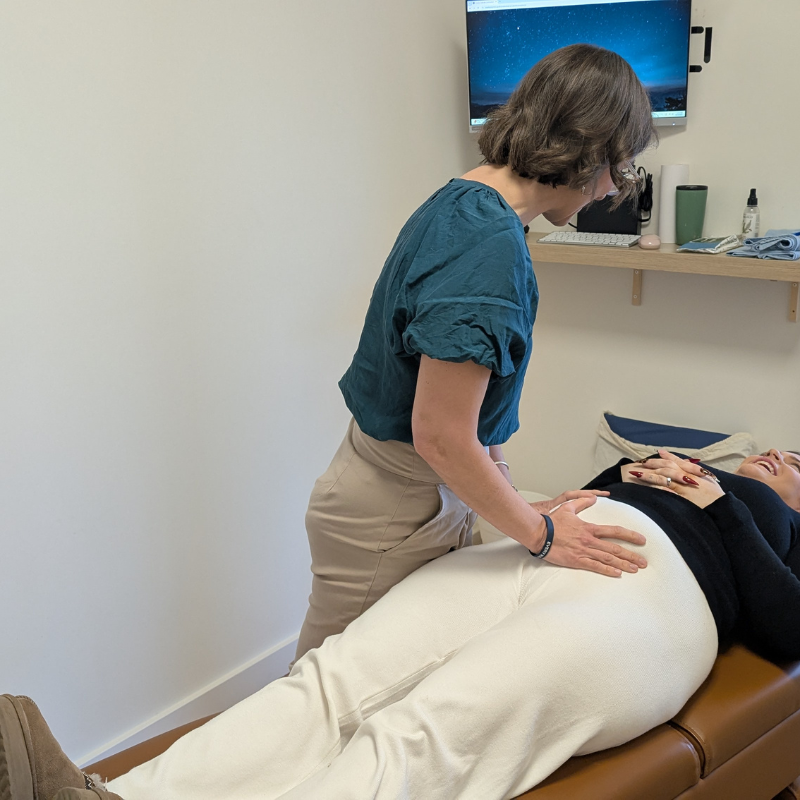
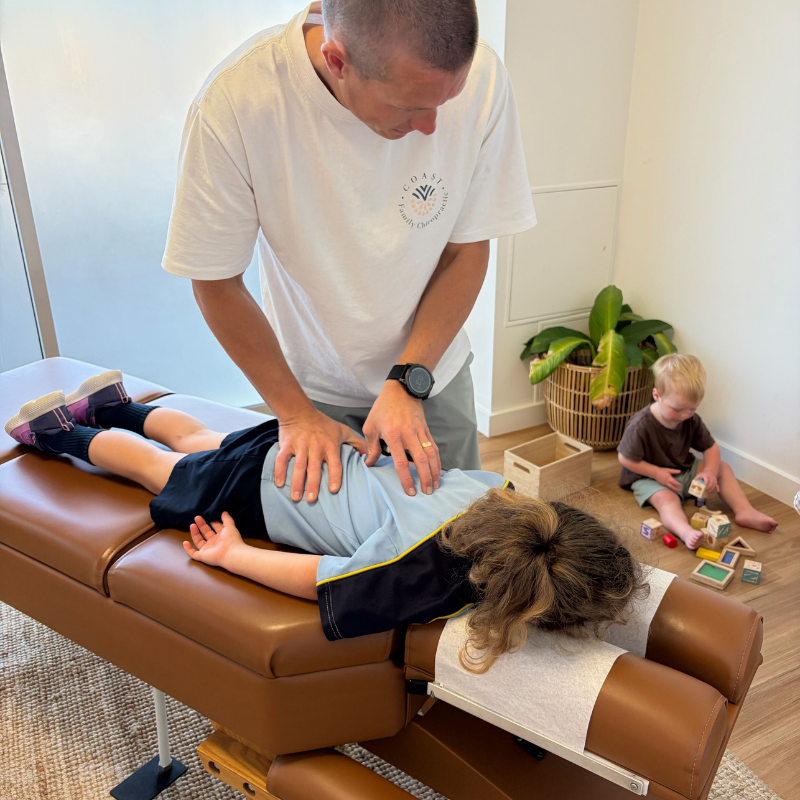
Chiropractic care in this context is focused on the relationship between the spine, nervous system, and the body’s ability to adapt and regulate.
Gentle adjustments are used with the aim of improving spinal movement and providing input to the nervous system that may support improved adaptability over time.
When more than one person in a household is experiencing high stress load, supporting multiple individuals can sometimes help shift overall family dynamics—not because one person is “causing” another’s symptoms, but because families function as interconnected systems.
You Don’t Have to Carry It All Alone
If you feel like you’ve been holding everything together while your child struggles, you are not alone in that experience.
Often, the most helpful shift is not adding more strategies—but zooming out to understand how the whole system is functioning.
This can include considering sleep, stress, environment, and nervous system regulation across the family.
You’ve already done the hard work of showing up. The next step is often about support, not more effort.
Final Thoughts
At Coast Family Chiropractic, we take a family-centred approach to nervous system health using chiropractic care and functional assessment tools like INSiGHT Scans.
If you would like to explore this further, you can book an assessment for yourself or your child to better understand how your nervous system is adapting to stress.
The goal is not perfection. It is creating more capacity for regulation, connection, and ease within the family system.p isn’t removing every trigger. It’s understanding the child’s capacity — and supporting it in a way that makes life more manageable. Because for many families, that’s where things begin to shift.