One day, your child is just… themselves. The next, something feels different.
Tics appear seemingly out of nowhere. OCD behaviours start taking over their day. Rage, anxiety and separation issues show up suddenly. You may have been searching for answers and wondering how so much could change in such a short space of time.
And if you’re reading this because your child’s behaviour, emotions or neurological symptoms changed dramatically following an illness, you may have come across the terms PANS or PANDAS.
What PANS and PANDAS Actually Are
PANDAS stands for Paediatric Autoimmune Neuropsychiatric Disorders Associated with Streptococcal Infections. PANS stands for Paediatric Acute-onset Neuropsychiatric Syndrome and describes the sudden onset of obsessive-compulsive symptoms or severely restricted food intake alongside other neuropsychiatric symptoms.
PANDAS is associated specifically with group A streptococcal infection, while PANS is a broader clinical syndrome in which a number of potential triggers may be considered.
Symptoms associated with PANS and PANDAS can include:
- Sudden OCD behaviours — such as checking, counting, excessive handwashing or fear of germs
- Motor tics, such as eye blinking, facial grimacing or head jerking, and vocal tics such as throat clearing or grunting
- Emotional changes, irritability, rage and separation anxiety
- Sensory sensitivities
- Changes in behaviour or developmental skills
- Changes in handwriting or school performance
- Sleep disturbances
- Changes in urinary frequency or continence
One of the features families often describe is the speed of the change — symptoms can appear abruptly rather than gradually developing over months or years.
Why This Isn’t Always a Simple Picture
Not every child who experiences a streptococcal infection develops PANDAS, and there is still much being researched about why some children may be more susceptible than others.
From a neurologically focused perspective, we’re also interested in the broader picture of how a child’s nervous system has been adapting to stress over time.
Rather than viewing one infection or event in isolation, we look at the different factors that may have contributed to a child’s overall neurological load.
These may include:
- Individual susceptibility. Every child’s neurological and physiological makeup is different.
- Environmental and lifestyle stressors. A child’s nervous system is continually responding and adapting to their environment.
- Timing and frequency of stress. Repeated physical, chemical and emotional stressors may influence how well a child is able to adapt.
- Existing patterns of nervous system dysregulation. Some children may already show signs that their nervous system is having difficulty shifting appropriately between states of stress, activity, rest and recovery.
For some children, an illness may seem to be the event that precedes a dramatic change. But when we take a detailed history, there can sometimes be signs that their nervous system had been under significant stress well before that point.
That broader history matters.
Why So Many Families Feel Stuck
PANS and PANDAS can be incredibly complex, particularly when a child is experiencing symptoms that cross neurological, behavioural, emotional and immune-related areas.
Understandably, families may explore many different options as they search for answers.
What can sometimes get lost along the way is the bigger picture of how the child’s nervous system is functioning and adapting.
At Coast Family Chiropractic, that’s the part we’re particularly interested in.
We aren’t looking at a child’s diagnosis and asking how chiropractic care can treat it. Instead, we’re looking at the child in front of us and asking:
What patterns can we see in the way their nervous system is functioning?
Is their system adapting well to everyday stress?
Can it move effectively between activation and rest?
Are there patterns of tension or autonomic imbalance that may be worth understanding?
Those questions form the starting point for our approach.
A Different Starting Point: The Nervous System
Neurologically Focused Chiropractic Care starts with the nervous system.
The goal isn’t to diagnose, treat or cure PANS or PANDAS. Instead, we assess the function of the neurospinal system and look for patterns that may indicate that a child’s nervous system is under increased stress or having difficulty adapting.
A few things worth understanding:
- Subluxation is more than simply a “misaligned bone”. Within chiropractic, the term is used to describe changes in neurospinal function that may influence the way the nervous system processes and responds to information.
- We don’t simply rely on symptoms. At Coast Family Chiropractic, we use INSiGHT scanning technology alongside a detailed history and chiropractic assessment to gather information about patterns of nervous system and neurospinal function.
- The scans are non-invasive. Depending on the assessment, this technology can look at measures associated with autonomic activity, temperature patterns and muscle activity along the spine.
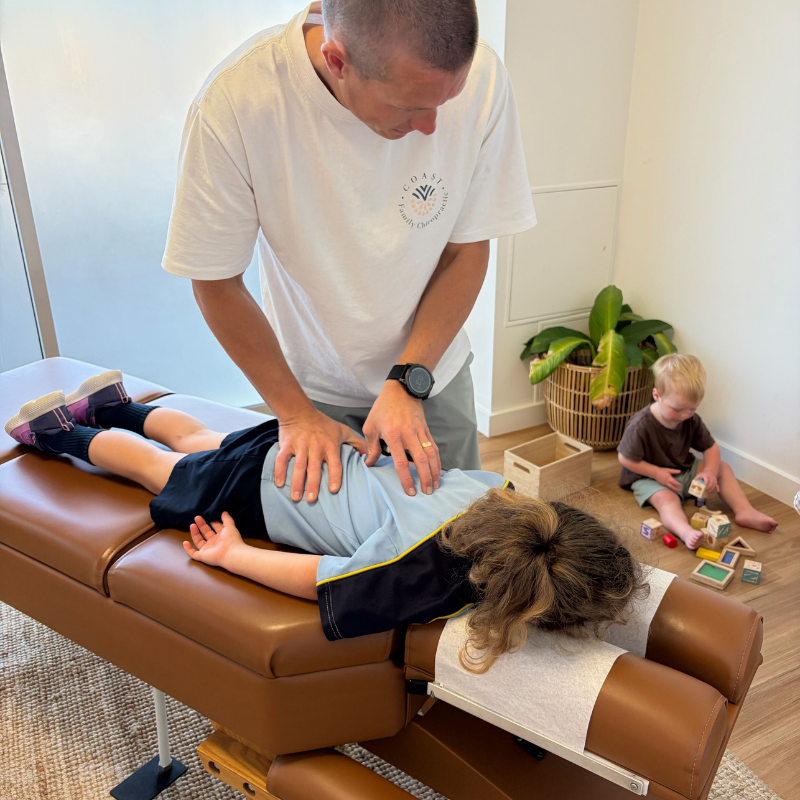
- Care is individualised. Where chiropractic care is appropriate, gentle and specific adjustments may form part of a care plan designed around the individual child’s assessment findings.
- Our focus remains chiropractic. We aren’t treating PANS, PANDAS, OCD, tics or another medical diagnosis. Our role is to assess and provide chiropractic care focused on neurospinal function.
For families who have spent months looking at symptoms individually, this can provide a different lens: looking at patterns within the nervous system rather than another label to add to the list.
Looking Beyond the Label
When your child changes suddenly, it’s understandable to want to know why.
A diagnosis may help give a name to what’s happening, but parents often still have questions about their child’s broader health and function.
What was happening before this began?
Were there earlier signs that their nervous system was struggling to adapt?
How are they responding to stress now?
What can we learn from assessing their neurospinal function?
These are the kinds of questions we explore at Coast Family Chiropractic.
Our Neurological INSiGHT Scans and chiropractic assessment give us additional information about patterns of nervous system and neurospinal function. From there, we can determine whether chiropractic care may be appropriate for your child and explain what that care could look like.
Your Child Is More Than a Label
If your family has been navigating PANS or PANDAS, you may already have spent a great deal of time trying to understand what’s happening.
At Coast Family Chiropractic, our focus is on understanding the child in front of us — their history, their nervous system and their individual patterns of neurospinal function.
If you’d like to explore that part of the picture, you can contact our team to arrange an initial consultation and neurological assessment.
Sometimes the next useful step isn’t another label. It’s gathering more information about how your child’s nervous system is functioning.