When we think about helping kids perform well in sport, we usually think about the obvious things.
Strength.
Fitness.
Speed.
Technique.
Practice.
And while all of those things matter, there is another system working behind the scenes every single time your child runs, jumps, catches, kicks, lands or changes direction:
their nervous system.
Whether your child is playing weekend footy, dancing, swimming, surfing, doing gymnastics or competing at a high level, their brain and body are constantly communicating to help them understand where they are, control their movement and respond to what is happening around them.
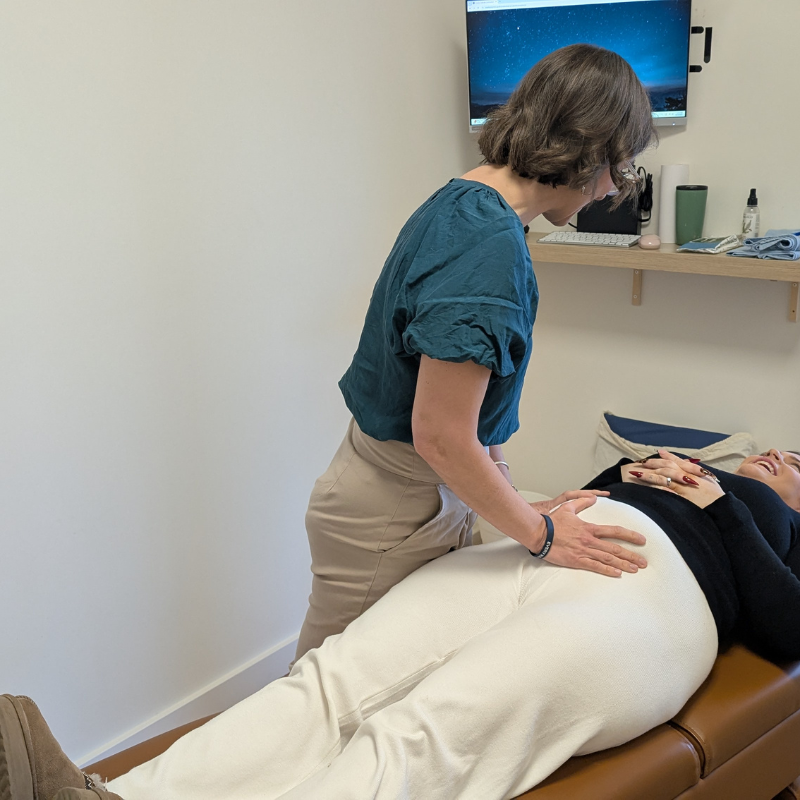
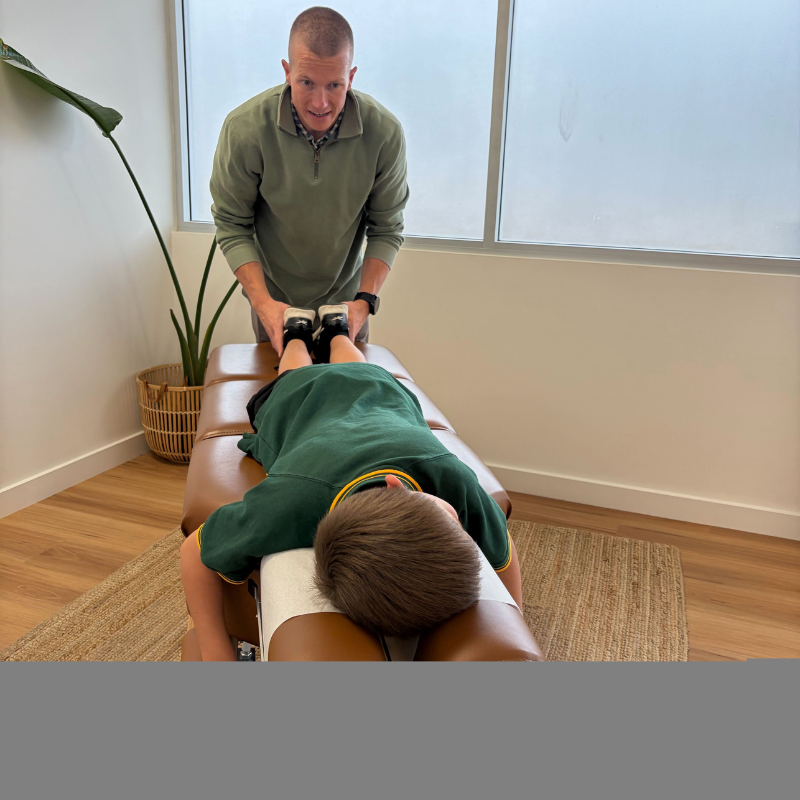
At Coast Family Chiropractic, this is one of the reasons we’re interested in looking beyond simply asking, “Does anything hurt?”
We’re also interested in the bigger picture of how kids and teenagers move, balance, coordinate and adapt.
Movement Starts With the Brain
Before your child can move a muscle, their nervous system has to organise the movement.
Imagine your child running towards a football.
Their brain needs to determine:
- Where is the ball?
- How fast is it moving?
- Where is my body?
- Where are my feet?
- Which direction do I need to move?
- How much force do I need?
- What are the other players around me doing?
And it needs to process much of this almost instantly.
Information is constantly travelling between the brain and the rest of the body.
The nervous system then helps coordinate the muscles required to create the movement.
So while we see the finished product — the kick, jump, sprint or catch — there is an enormous amount of neurological processing happening underneath it.
1. Balance Is More Than Just Standing on One Leg
Balance is a great example of how complex movement really is.
Your brain is constantly combining information from several different systems, including your:
Eyes — providing information about the environment around you.
Vestibular system — located within the inner ear and helping detect movement and head position.
Proprioceptive system — providing information from muscles and joints about where different parts of your body are positioned.
The brain integrates this information and continuously makes small adjustments to keep the body stable.
For a young athlete, this becomes important when they are running, landing, being bumped by another player or rapidly changing direction.
Postural control in children involves multiple systems, including sensory integration, motor control and both static and dynamic stability.
2. Proprioception: Your Child’s Internal Body Map
One of the terms we often talk about when discussing movement is proprioception.
A simple way to think about proprioception is your brain’s awareness of where your body is positioned without having to look at it.
Try closing your eyes and touching your finger to your nose.
You don’t need to see your arm to know where it is.
That internal awareness is incredibly important during sport.
It contributes to things like:
- balance
- coordination
- joint position awareness
- movement control
- changing direction
- landing
- interacting with a ball or another player.
Research into proprioceptive training in athletes has found associations with improvements across several aspects of physical performance, including balance, agility and postural stability.
In other words, being athletic isn’t simply about producing force.
Your child also needs to know where their body is and how to control it.
3. Posture Isn’t Just About “Standing Up Straight”
When many parents hear the word posture, they picture someone sitting at a desk with rounded shoulders.
But posture is much more dynamic than that.
Your nervous system is constantly making small adjustments to help stabilise your body against gravity.
During sport, this becomes even more obvious.
Think about a child:
- sprinting around a corner
- landing after jumping
- kicking a football
- swinging a tennis racquet
- standing on a surfboard
- changing direction to avoid another player.
Their body needs to maintain enough stability while still allowing movement.
This is sometimes referred to as postural control.
And just like balance and coordination, it depends on information being received, processed and acted upon by the nervous system.
4. Why Growing Teenagers Can Suddenly Look Awkward
Parents will sometimes tell us:
“He used to be really coordinated and lately he just looks awkward.”
That can be particularly noticeable during growth spurts.
Imagine your brain having a detailed internal map of your body and then, over a relatively short period of time, your legs get longer, your centre of mass changes and your body becomes taller and heavier.
The nervous system has to continually adapt to those changes.
This doesn’t automatically mean that something is wrong.
Growing children and teenagers naturally go through changes in movement and coordination.
But it helps explain why looking at movement in children needs to be different from looking at movement in adults.
Their bodies aren’t simply smaller adult bodies — they are developing systems.
5. What Happens When They Get Tired?
One of the most interesting times to watch a young athlete isn’t necessarily at the beginning of a game.
It’s towards the end.
When fatigue builds, you might notice:
- posture becoming less controlled
- balance deteriorating
- movements becoming less precise
- running mechanics changing
- coordination becoming more difficult.
Fatigue during sport is normal.
What it highlights, however, is just how much coordination is required for the nervous system to maintain effective movement as physical demands increase.
This concept is one reason neuromuscular training is commonly incorporated into youth sport. Recent research has examined its role in areas such as static and dynamic postural stability in young athletes.
Sport Is Constantly Asking the Nervous System to Adapt
Sport isn’t predictable.
The ball changes direction.
Another player moves unexpectedly.
The ground isn’t perfectly flat.
Your child gets bumped.
They lose their footing.
Their body becomes tired.
Their nervous system is continually being asked to:
SENSE → PROCESS → RESPOND
…and then repeat that cycle again and again.
This ability to respond appropriately to changing demands is one of the reasons we talk so much about adaptability at Coast.
And importantly, this doesn’t only apply to sport.
Kids and teenagers are adapting to physical activity alongside school, learning, relationships, sleep, emotional stress and everything else happening in their lives.
Why We Look Beyond Pain at Coast
Traditionally, many people think about visiting a chiropractor because something hurts.
Pain is certainly one reason someone may seek an assessment.
But when we’re assessing growing kids and teenagers at Coast Family Chiropractic, we’re also interested in understanding the broader musculoskeletal and neurological picture.
Depending on the individual child and their presentation, this may include looking at areas such as:
- posture
- balance
- coordination
- movement
- spinal and joint function
- muscle activity
- relevant aspects of nervous-system function.
These findings are considered alongside their health history, sporting demands, goals and clinical assessment.
The purpose isn’t to promise that chiropractic care will make a child run faster, jump higher or become a better athlete.
Instead, it helps us understand more about how that individual child is moving and functioning, and whether there are appropriate areas for chiropractic care or whether another health or performance professional may be better placed to help.
For young athletes, good care can also involve a team.
Depending on their needs, that may include their GP, physiotherapist, exercise physiologist, sports physician, strength and conditioning coach or other appropriately qualified practitioners.
Watch More Than the Scoreboard
Next time you’re standing on the sidelines watching your child play sport, try looking at something different.
Don’t only watch whether they score.
Watch how they move.
How do they balance?
How do they land?
How smoothly do they change direction?
What happens to their posture when they get tired?
How coordinated do their movements appear?
Because underneath every sprint, jump, kick and catch is an incredibly sophisticated conversation happening between the brain and body.
And understanding that conversation can give us a much bigger appreciation of what goes into helping growing kids move well.
Want to understand more about how your child is moving?
At Coast Family Chiropractic, we take a neurologically focused approach to assessing children, teenagers and families.
If you’ve noticed changes in your child’s posture, balance or movement, or simply have questions about whether a chiropractic assessment may be appropriate for them, get in touch with our team and we can help you understand the next step.