You’ve changed the diet. You read every label at the supermarket. You’ve researched probiotics, fibre, fermented foods and every new piece of gut-health advice that comes your way.
And you’re still wondering whether you’re missing something.
Here’s one part of the conversation we think deserves more attention:
Gut health doesn’t only involve the gut. It also involves the nervous system.
Digestion is coordinated through an extraordinary two-way communication network between the brain, nervous system and gastrointestinal tract.
The gut sends information to the brain.
The brain sends information to the gut.
And your autonomic nervous system plays an important role in coordinating functions including digestion and intestinal movement.
So while food and the microbiome absolutely matter, they’re not the entire story.
If you’ve spent a lot of time thinking about what your child eats, it may be interesting to understand more about the system helping their body coordinate what happens next.
Gut Health Is Bigger Than Digestion
When we talk about gut health, it’s easy to think only about what happens after your child eats.
Bloating.
Gas.
Constipation.
Diarrhoea.
Abdominal discomfort.
But the gastrointestinal system doesn’t operate independently from the rest of the body.
It has extensive connections with the nervous, endocrine and immune systems, and the intestinal tract contains a substantial amount of the body’s immune tissue.
The gut is also home to trillions of microorganisms collectively known as the gut microbiome.
These systems interact in extraordinarily complex ways.
That’s why researchers increasingly talk about the gut–brain axis rather than thinking about the gut and brain as completely separate systems.
At Coast Family Chiropractic, it’s the neurological part of that relationship we’re particularly interested in.
The Brain and Gut Are Constantly Talking
You’ve probably heard the gut described as the “second brain”.
That’s partly because the gastrointestinal tract contains its own extensive network of neurons known as the enteric nervous system.
But the enteric nervous system doesn’t operate entirely on its own.
The brain, spinal cord, autonomic nervous system, enteric nervous system and gut are continually exchanging information.
One of the important communication pathways involved is the vagus nerve.
The vagus is a major cranial nerve and an important component of the parasympathetic nervous system. It carries information in both directions between the brain and internal organs, including the gastrointestinal tract.
Interestingly, much of the information travelling along the vagus nerve actually travels from the body towards the brain.
So rather than thinking:
Brain → gut
or:
Gut → brain
it’s much more accurate to picture an ongoing conversation:
BRAIN ↔ NERVOUS SYSTEM ↔ GUT
And that conversation is happening all day, every day.
Your Nervous System Changes Digestion
Think about what happens when you’re extremely nervous.
Maybe you’re about to give a presentation.
You’re waiting for an important phone call.
Or something has frightened you.
Suddenly, you may lose your appetite. Your stomach might feel unsettled. You might need to rush to the bathroom — or experience the opposite.
That’s not imaginary.
It’s a very real example of the relationship between the autonomic nervous system and digestive function.
The sympathetic nervous system helps mobilise the body during activity and challenge.
The parasympathetic nervous system is more closely associated with functions including rest and digestion.
We need both.
The goal isn’t to keep the body permanently in “rest and digest” mode. A healthy nervous system needs to respond appropriately to whatever is happening.
At Coast, what interests us is adaptability.
Can the nervous system respond to demand?
Can it shift gears afterwards?
And what patterns can we observe when we assess how someone’s nervous system and neurospinal system are functioning?
The Vagus Nerve Isn’t a Magic Gut Switch
The vagus nerve has become incredibly popular in health and wellness conversations.
And while it’s an important part of autonomic regulation, we need to be careful not to make it responsible for everything.
Constipation doesn’t automatically mean someone has “poor vagal tone”.
Neither does reflux, bloating, food sensitivity or abdominal discomfort.
There can be many reasons a child experiences digestive symptoms.
What we can say is that autonomic regulation and gastrointestinal function are connected.
And that makes the nervous system an interesting part of the broader physiological picture.
For us as neurologically focused chiropractors, that leads to a different question:
What can we actually learn about this child’s nervous system and neurospinal function?
The “Perfect Storm”: Looking at the Whole Story
When we take a child’s history at Coast, we don’t only ask what’s happening today.
We want the bigger story.
We sometimes call this the child’s Perfect Storm — the combination of experiences and stressors that make up their individual history.
That might include:
- pregnancy and prenatal history
- birth and any interventions involved
- early feeding
- sleep
- illness and medication history
- physical activity and movement
- developmental milestones
- periods of significant physical or emotional stress
- diet and everyday routines.
We’re not looking through that history to find one thing to blame.
And we’re not suggesting that a particular birth, illness, medication or stressful experience caused a child’s digestive symptoms.
We’re looking for patterns and context.
What has this developing nervous system experienced?
How has the child adapted over time?
And what do we find when we assess them now?
Why Probiotics Are Only One Part of the Conversation
Probiotics can influence the gut microbiome, and nutrition provides the nutrients, fibre and other components that support gastrointestinal health.
But neither gives us a complete picture of digestive physiology.
Digestion involves coordinated activity across multiple systems.
The nervous system contributes to functions including gastrointestinal motility, secretion and communication between the digestive tract and brain.
That doesn’t mean a probiotic “won’t work” if the nervous system isn’t functioning in a particular way.
And it doesn’t mean chiropractic care makes supplements work better.
It’s simply a reminder that the body doesn’t operate in isolated departments.
Food matters.
The microbiome matters.
And neurological regulation matters too.
At Coast, that’s the piece we’re particularly interested in assessing.
What Does the Spine Have to Do With It?
This is where the chiropractic perspective comes in.
The spine isn’t simply a stack of bones protecting the spinal cord.
It’s also an incredibly rich source of sensory information.
Receptors within the muscles, joints and surrounding tissues continually send information to the nervous system about movement, position and load.
That sensory information contributes to the brain’s ongoing understanding of the body.
At Coast, we use the term neurospinal system to describe this close relationship between the spine and nervous system.
Within chiropractic, subluxation describes changes in neurospinal function that may influence how sensory information from the spine is processed.
We aren’t saying that a vertebra is “out” and causing constipation.
And we don’t diagnose digestive conditions through the spine.
We’re assessing neurospinal function as its own area of interest.
That’s an important distinction.
This Is Where We Measure
Rather than assuming a child’s nervous system is “dysregulated” because they’re experiencing digestive symptoms, at Coast we assess.
Our Neurological INSiGHT Scans can provide information about patterns associated with autonomic activity, muscle activity and temperature along the spine.
Depending on the child’s age and assessment, these may include:
Heart Rate Variability (HRV) — providing information about variation between heartbeats and aspects of autonomic activity.
Surface electromyography (sEMG) — measuring patterns of muscle activity along the spine.
NeuroThermal scanning — measuring temperature patterns along the spine.
These scans don’t diagnose constipation, reflux, food intolerance, microbiome imbalance or other gastrointestinal conditions.
They give us additional information about nervous system and neurospinal function that we consider alongside the child’s history and chiropractic examination.
This allows us to base our chiropractic care on what we actually find rather than assuming that a particular symptom tells us what’s happening neurologically.
A Neurologically Focused Approach
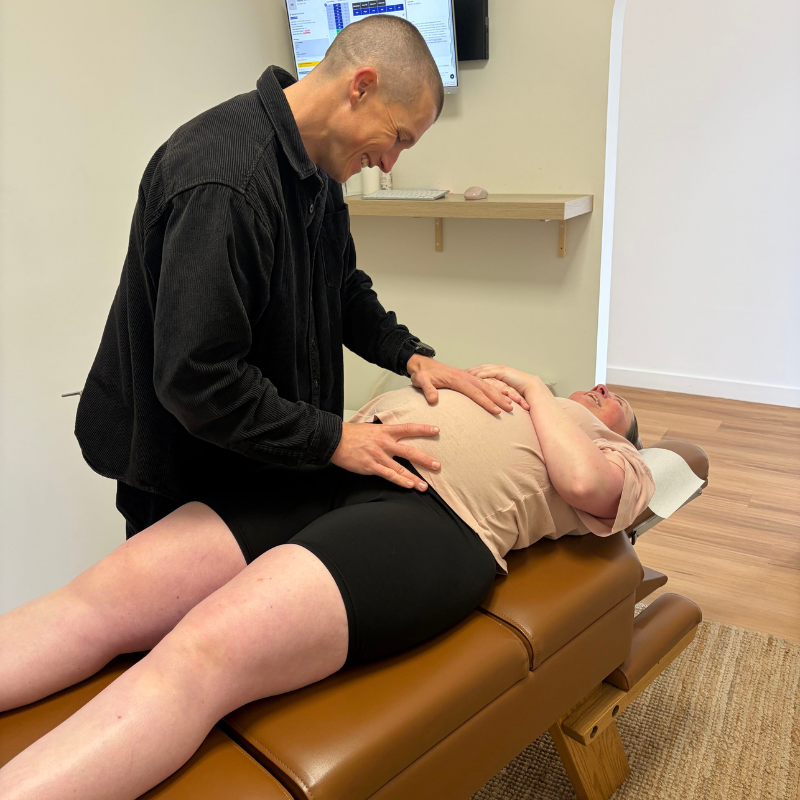
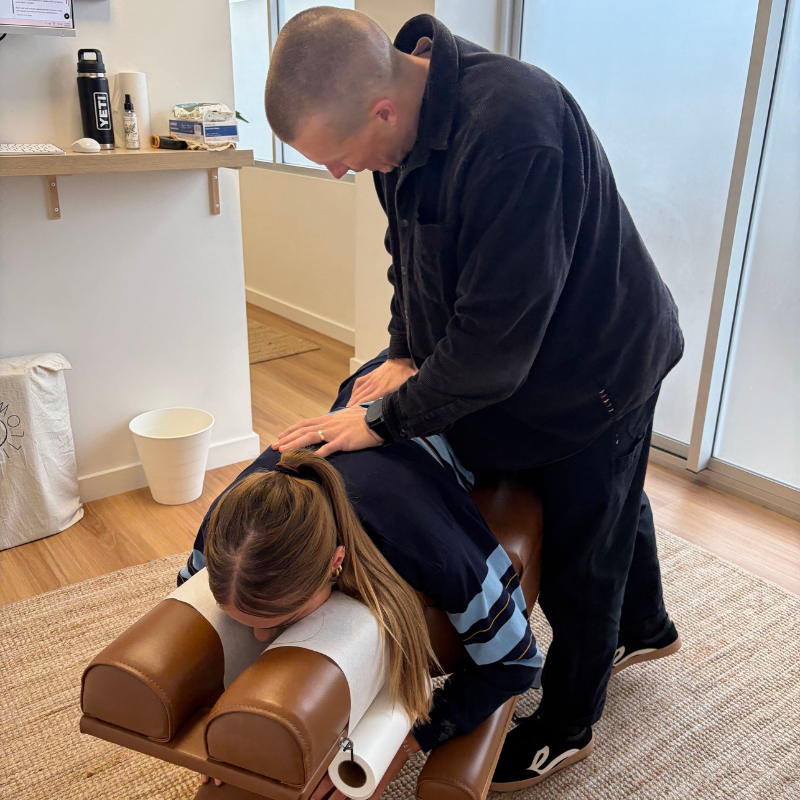
Where our assessment indicates chiropractic care is appropriate, gentle and specific adjustments are tailored to the individual child and their neurospinal findings.
Our goal isn’t to treat a digestive condition.
And we don’t claim that an adjustment “switches digestion back on”.
Our focus is the neurospinal system.
We assess how it’s functioning, provide chiropractic care based on those findings and can reassess relevant measures over time.
That might sound like a subtle distinction, but it’s an important one.
Neurologically Focused Chiropractic Care isn’t another gut-health protocol.
It’s a specific approach to assessing and caring for the relationship between the spine and nervous system.
Keep Doing the Good Stuff
The nutritious food.
The colourful plates.
The fibre.
The movement.
The sleep routines.
The time outside.
The things you’re already doing to support your child’s health still matter.
You don’t need to throw away the probiotics because you’ve suddenly discovered the nervous system.
But if you’ve spent a lot of time thinking about your child’s gut and very little time thinking about the neurological system involved in regulating digestive function, there may be another interesting part of the picture to explore.
At Coast Family Chiropractic, we take a neurologically focused approach to assessing babies, children, teenagers and families.
If you’re curious about your child’s nervous system and neurospinal function, contact our team to arrange an initial consultation and Neurological INSiGHT Scans.
Because gut health isn’t just a conversation about what’s happening in the gut. It’s also a conversation between the gut, brain and nervous system.