Birth trauma doesn’t always look like 40 hours of labour or weeks in neonatal intensive care.
Sometimes it’s an emergency Caesarean birth. A vacuum or forceps delivery. A very long labour. An unexpectedly fast one. A baby in a difficult position. Or simply a birth that felt physically or emotionally very different from what you had expected.
Sometimes everything is recorded as “normal”, you leave hospital with a healthy baby, and yet some part of you still wonders whether the way they entered the world matters.
At Coast Family Chiropractic, there’s a reason we ask parents detailed questions about pregnancy and birth — even when their child is now months or years old.
Birth is a significant physical event for both mother and baby.
And when we’re assessing a child’s movement, spine and neurospinal function, their birth story can give us useful context about where their journey began.
Who This Is For
This is for parents who have wondered whether their child’s birth story is still relevant.
Maybe their birth involved interventions.
Maybe labour was particularly long or fast.
Maybe there was an unusual presentation or an emergency change of plan.
Or perhaps nothing dramatic happened at all, but you’re curious about why a paediatric chiropractor wants to know so much about a birth that happened months — or even years — ago.
The answer isn’t that we believe every intervention creates a problem.
And it isn’t that a particular type of birth predicts what happens next.
It’s because when we assess growing babies and children, history matters.
Pregnancy, birth, early development, movement and everything that’s happened since all help us understand the child we’re assessing today.
Birth Trauma Is Bigger Than a Birth Injury
When people hear the words “birth trauma”, they often think about physical birth injuries such as fractures or nerve injuries.
Those are genuine medical complications, but they’re not the only way the word trauma is used around birth.
For a mother, birth trauma can also describe the psychological and emotional experience of birth — particularly when it involved fear, loss of control, emergency intervention or feeling unheard.
For a baby, we’re interested in something different again:
the physical experience of birth.
During labour and delivery, a baby’s body is exposed to compression, rotation, flexion, extension and other mechanical forces.
Most babies adapt remarkably well to birth.
But the nature and amount of physical force involved can vary considerably depending on the labour, baby’s position and whether assistance or intervention was required.
That’s why a baby’s birth history is relevant information when we’re assessing their musculoskeletal and neurospinal function.
Not because a difficult birth automatically means something is wrong.
Because it tells us something about what their developing body has experienced.
The Perfect Storm Starts Before Labour
At Coast, we often use the term Perfect Storm when we’re taking a detailed history.
It doesn’t mean we’re looking for one event to blame.
Quite the opposite.
We’re looking at the combination of experiences that make up an individual child’s story.
That may include:
- significant stress during pregnancy
- baby’s position during pregnancy and labour
- prolonged or very rapid labour
- fetal distress or an unexpected change during delivery
- assisted birth involving forceps or vacuum
- Caesarean birth
- early feeding and sleep
- movement and developmental milestones
- illness, injury and other physical stressors during infancy and childhood.
No individual factor tells us how a child’s nervous system is functioning today.
And a Caesarean, induction, forceps delivery or difficult labour doesn’t automatically create neurospinal dysfunction.
Instead, these details give us context that we consider alongside what we actually find when we assess the child.
We’re interested in the whole story, not finding one event to blame.
Why We Ask About Birth Interventions
Different births involve different physical forces.
Forceps and vacuum-assisted birth
When assistance is required during delivery, additional forces may be applied to a baby’s head and neck.
From a chiropractic perspective, that makes the baby’s cervical spine, movement and surrounding muscular function particularly relevant areas to assess.
It doesn’t mean the intervention harmed the baby.
It means it’s useful information when we’re building their physical history.
Caesarean birth
A Caesarean birth involves a very different physical journey from a vaginal birth.
There are many reasons a Caesarean may be necessary or chosen, and the circumstances can vary enormously — from planned procedures to urgent interventions following a long labour.
That’s why we don’t simply record “C-section” and draw a conclusion from it.
We want to understand the story around it.
Was labour already underway?
How long had it progressed?
What position was baby in?
Was the procedure planned or urgent?
What happened afterwards?
Those details give us a much richer picture.
Very long or very fast labour
The length of labour can also change the physical experience of birth.
A prolonged labour can involve repeated forces over an extended period, while a very rapid labour presents its own set of physical demands.
Again, neither tells us that a child has a problem.
It simply gives us another piece of their history.
Baby’s position
Breech, posterior and other presentations can change the mechanics of labour and delivery.
For a chiropractor assessing a baby or child, understanding positioning can provide useful context when looking at movement, symmetry and spinal function.
What Does Subluxation Mean?
This is where it’s important to explain what we’re actually talking about when we use the word subluxation.
Within chiropractic, subluxation isn’t simply a bone that’s “out of place”.
We use the term to describe changes in neurospinal function — involving the relationship between spinal movement and the sensory information continually travelling between the spine and nervous system.
The spine contains a huge number of sensory receptors.
Every time we move, those receptors provide the brain with information about position, movement and load.
At Coast, we’re interested in how that system is functioning.
That’s why, when a baby or child has experienced a physically demanding birth, we’re not looking at their history and simply declaring:
“Birth trauma caused a subluxation.”
We take the history.
Then we assess the child in front of us.
What About the Vagus Nerve?
The vagus nerve gets talked about a lot in nervous-system conversations — and for good reason.
It’s a major cranial nerve and an important component of the parasympathetic nervous system, with roles in autonomic functions including heart rate and digestion.
But we need to be careful not to turn the vagus nerve into an explanation for every behaviour or symptom a baby experiences.
Crying doesn’t automatically mean vagus nerve dysfunction.
Neither does reflux, constipation, unsettled sleep or difficulty feeding.
Babies can experience these things for many different reasons.
What we can look at is the broader pattern of autonomic and neurospinal function.
Rather than saying:
“This symptom means the vagus nerve isn’t working.”
we’re interested in:
“What can we objectively learn about this child’s nervous system and neurospinal function?”
That’s a much more useful question.
This Is Where We Measure
A birth history gives us context.
Assessment gives us information about the child today.
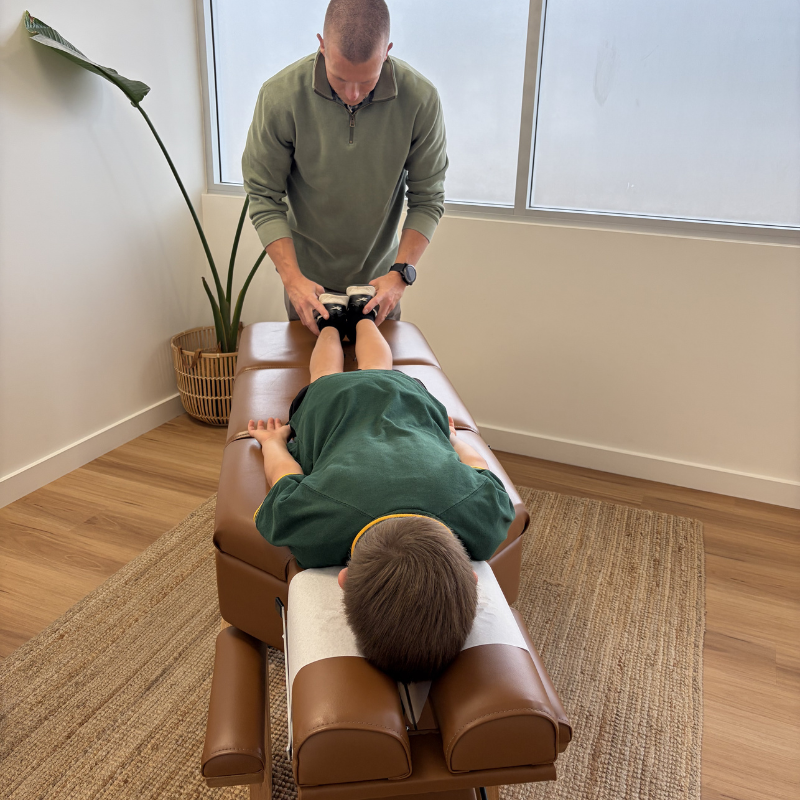
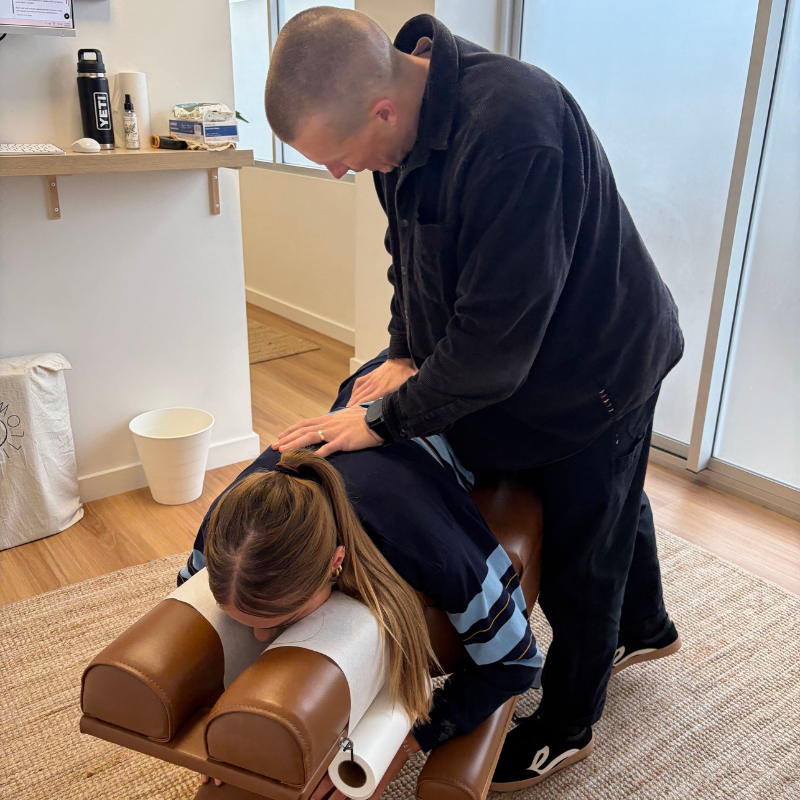
At Coast Family Chiropractic, our paediatric assessment may include observation of movement, spinal and joint function, muscle activity and relevant aspects of nervous system function.
We also use Neurological INSiGHT Scans to provide additional information about patterns associated with autonomic activity, muscle activity and temperature along the spine.
Depending on the child’s age and assessment, these may include:
Heart Rate Variability (HRV) — providing information about variation between heartbeats and aspects of autonomic activity.
Surface electromyography (sEMG) — measuring patterns of muscle activity along the spine.
NeuroThermal scanning — measuring temperature patterns along the spine.
These scans don’t tell us that a difficult birth caused a child’s current symptoms.
They don’t diagnose colic, reflux, ADHD, sensory processing disorders or developmental conditions.
They give us additional information about nervous system and neurospinal function that we consider alongside the child’s history and chiropractic examination.
That distinction matters.
What Does Chiropractic Care Look Like for a Baby?
Understandably, some parents hear “chiropractic adjustment” and picture the type of adjustment they may have seen performed on an adult.
Paediatric chiropractic care at Coast looks very different.
Techniques are adapted to the child’s age, size and individual assessment findings.
For babies, adjustments are gentle and specific, using very light pressure. There is no forceful twisting or “cracking” of an infant’s spine.
Where our assessment indicates chiropractic care is appropriate, the care plan is based on that individual child’s neurospinal findings.
And just as importantly, we can reassess aspects of their neurospinal function over time rather than assuming that because something has changed externally, we know exactly what’s happening neurologically.
Your Child’s Birth Story Is Information — Not a Verdict
If your child’s birth didn’t go to plan, this article isn’t here to give you another reason to replay it.
And if you had an induction, epidural, forceps, vacuum or Caesarean birth, we’re certainly not suggesting you made the wrong decision.
Birth is unpredictable.
Decisions sometimes have to be made quickly.
And there is no single “perfect” way for a baby to enter the world.
But your child’s birth story can still be useful information.
At Coast Family Chiropractic, we want to understand that story because it helps us understand the child we’re assessing today.
What happened during pregnancy?
How did labour unfold?
How did they enter the world?
What was feeding and sleep like afterwards?
How did they move and develop?
And, most importantly:
What do we actually find when we assess their neurospinal function now?
If you’ve wondered whether your baby’s or child’s birth story may be relevant to their chiropractic assessment, contact Coast Family Chiropractic to arrange an initial consultation and Neurological INSiGHT Scans.
Their birth story doesn’t give us the answer. But it can give us an important place to start asking better questions.