You’ve cleaned up the diet. Added the probiotics. Tried elimination plans, gut protocols, and supplement routines. You may have even explored testing and functional approaches.
And yet your child is still struggling with digestive symptoms, mood changes, skin irritation, sleep disruption, or behavioural challenges.
If this sounds familiar, you’re not alone—and it doesn’t necessarily mean you’ve missed something obvious or “not tried hard enough.”
Often, it simply means the focus has been on the gut alone, when the regulation of the gut involves something broader: the connection between the brain, nervous system, and digestive system.
Looking Beyond the Gut Alone
Many parents are told (directly or indirectly) that gut symptoms are primarily about food, bacteria, or digestion itself.
But in reality, digestion is influenced by a coordinated system involving the brain and nervous system, which communicates with the gut through pathways such as the vagus nerve.
This means the gut does not function in isolation. It responds to signals from the nervous system that help regulate movement, secretion, immune activity, and digestive rhythm.
When that communication is not functioning optimally, the gut may not respond as efficiently to even the best nutritional inputs.
This is one reason why some children don’t seem to respond as expected to dietary changes or supplementation alone.
The Brain–Gut Connection (and the Role of the Vagus Nerve)
The gut and brain are in constant two-way communication. One of the key pathways involved in this connection is the vagus nerve.
The vagus nerve plays a role in regulating:
- Digestive movement (motility)
- Communication between the gut and brain
- Certain aspects of immune and inflammatory activity
- Signals involved in nutrient processing and gut function
When this communication pathway is well-regulated, digestion tends to function more smoothly and adaptively.
When it is less coordinated, some children may experience patterns such as constipation, reflux, food sensitivities, or fluctuating digestive function—often alongside other symptoms like sleep or behavioural changes.
It’s not about “one system causing everything,” but rather how interconnected systems influence one another.
Gut Chemistry and Nervous System Regulation
A significant proportion of neurotransmitters and immune activity is linked to gut physiology, which is one reason the gut is often referred to as a “second brain.”
However, these processes are influenced by nervous system signalling. The brain and vagus nerve help regulate how the gut functions, responds, and adapts.
So when families notice digestion, immunity, mood, and sleep shifting together, it may reflect a broader pattern of system regulation rather than separate isolated issues.
This is where a more integrated view of brain–body communication can be helpful.
Why Some Children May Have Ongoing Digestive Challenges
There are many factors that can influence how a child’s nervous system and gut develop and function over time.
These may include:
- Early life stressors (prenatal, birth, or early infancy experiences)
- Physical strain or tension patterns through the spine and upper neck
- Environmental influences such as illness history, medications, or diet
- Ongoing stress on the developing nervous system
From a chiropractic perspective, physical stress or reduced mobility in certain areas of the spine may influence how efficiently the nervous system communicates with the body.
This is sometimes described as altered neural regulation or reduced adaptability within the system.
It’s important to note that these influences are not deterministic and do not guarantee specific outcomes—but they may help explain why some children present with persistent, multi-system symptoms.
Why Diet and Supplements Sometimes Plateau
Nutrition and supplementation can play an important role in supporting gut health.
However, they rely on the body’s ability to recognise, process, and respond to those inputs.
If nervous system regulation is not optimal, some children may not respond as expected—not because the approach is incorrect, but because the “communication system” that coordinates digestion may not be functioning efficiently.
This is often why families feel like they’ve “tried everything,” yet progress stalls after initial improvements or partial responses.
A more integrated approach considers both inputs (nutrition) and regulation (nervous system function).
What Improvement May Look Like Over Time
When nervous system regulation improves, changes can occur gradually and in different areas of health.
While every child is different, families often report shifts such as:
Early changes:
- Improved sleep patterns
- More regular bowel movements
- Changes in digestion or tolerance to foods
Following stages:
- Fewer digestive flare-ups
- Improvements in skin or immune-related symptoms
- More stable energy or behaviour
Over time:
- Greater emotional regulation
- Improved focus and adaptability
- Developmental progress in some cases
These changes are not linear and do not happen the same way for every child—but they can reflect improving nervous system adaptability and overall regulation.
A Chiropractic Perspective on the Nervous System
In chiropractic care, we focus on how the spine and nervous system work together to support overall function and adaptability.
At Coast Family Chiropractic, we use tools such as INSiGHT Scans to help assess patterns of nervous system tension and regulation.
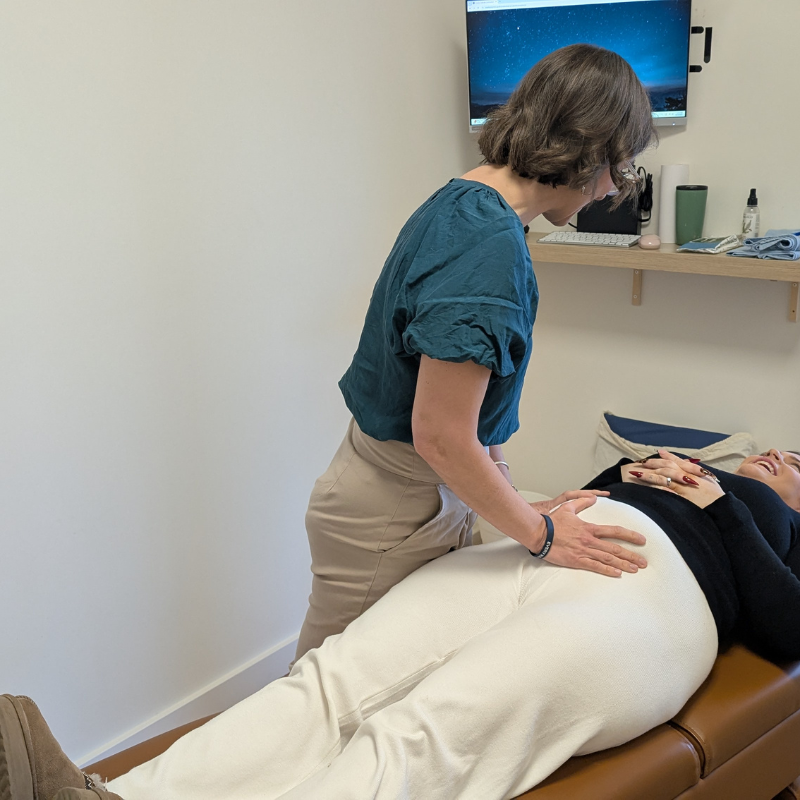
From there, gentle, specific chiropractic care may be used to support improved spinal movement and nervous system function.
This is not about treating gut issues directly. It is about supporting the body’s capacity to regulate and coordinate itself more effectively.
Final Thoughts
If you’ve been working hard to support your child’s gut health but still feel like something isn’t connecting, it may be worth looking at how the nervous system and gut are communicating.
Sometimes the missing piece isn’t more intervention—it’s a broader perspective on regulation and coordination within the body.
At Coast Family Chiropractic, we help families explore this connection using a neurological approach to chiropractic care.
Your child’s body is always adapting. The goal is simply to support it in doing that as effectively as possible.